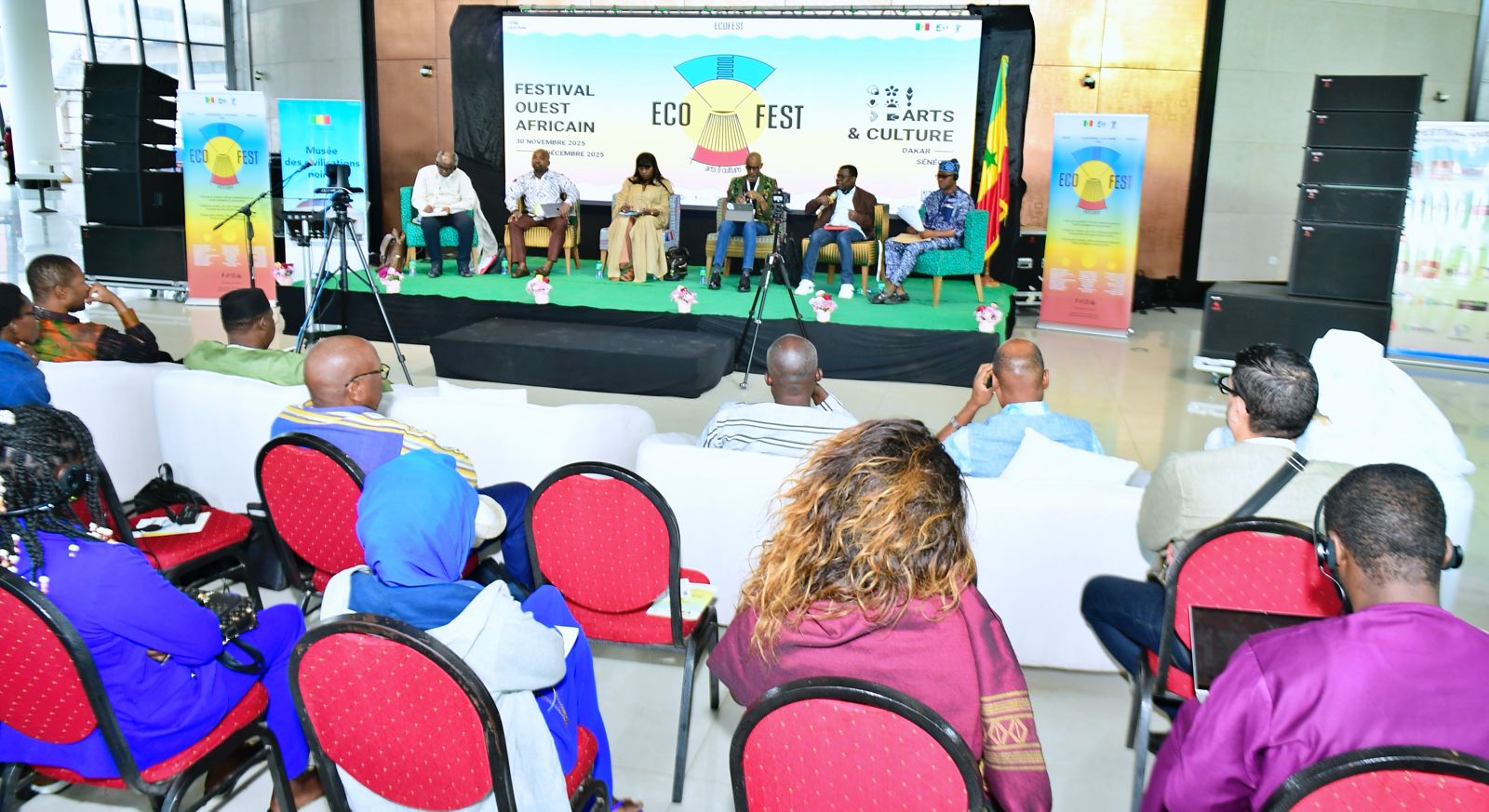
On the sidelines of the first edition of the West African Arts and Culture Festival (ECOFEST 2025), holding from 30th November to 6th December, academics and development stakeholders met to discuss the role of culture in mitigating fragilities in West African border areas.
Addressing the topic “Culture and mitigation of fragilities in border areas”, Pr Mountaga DIALLO, teacher-researcher at Cheikh Anta Diop University in Dakar, delivered a frank analysis of persistent vulnerabilities in these peripheral areas, while the Burkinabe expert Christian Georges TIEMTORÉ insisted on the need for sustainable funding of cross-border cultural initiatives.
According to Professor Diallo, West African borders are home to a cluster of structural fragilities fueled by their remoteness from decision-making centers, their isolation and persistent marginalization in public policies.
“The further an area is from the center, the smaller is investment” he said, while highlighting the following paradox : “ these territories are rich in natural resources yet marked by high levels of poverty and limited access to employment or training. ”
These socio-economic vulnerabilities are compounded by recurring tensions related to shared use of resources. Cross-border transhumance, amplified by demographic pressure and increasing livestock numbers, is causing violent conflicts between herders and farmers. Added to this are land disputes between Indigenous, seasonal migrations and displacement of persons, as well as tensions arising from cross-border gold mining, particularly in the Senegal–Mali–Guinea tripoint.
In some areas, religious rivalries and the expansion of armed groups further exacerbate the fragility of populations who feel neglected by the nation-state, making social cohesion more precarious.
In light of this observation, Professor Diallo insists on the key role of culture as a lever for peace, cohesion and belonging. He first recommends strengthening cross-border cultural cooperation, as it has already begun through festivals, cultural days, and artistic encounters. He then called for the creation of a cross-border cultural agenda to coordinate and structure these initiatives.
The Senegalese academic also highlights the decisive role of traditional chieftaincy in what he calls “preventive local diplomacy”.
He noted that “ Their mediation has already helped ease tensions, especially on the Niger-Nigeria border” before calling for “ articulating culture and local development as culture can support sustainable resource management, conflict prevention and the emergence of shared economic activities.”
In the same vein, the cross-border expert Christian Georges TIEMTORÉ recalls the commitments of UEMOA advocating for increased funding for cross-border cultural projects. It calls for the definition of genuine concerted cultural policies, involving local authorities and cultural stakeholders, and for the provision of cultural infrastructures in border areas capable of permanently anchoring dialog and peaceful coexistence.
Far from being a mere symbolic vector according to experts, culture is a strategic tool for conflict prevention and an essential pillar of stability along West African borders.

Culture and border fragilities: Experts call for a new preventive local diplomacy
Democracy

Related Posts








We bring you the best news update in Nigeria
LEARN MORE »