• Privacy Policy
  • Terms
  • About us
  • Contact Us
  • Staff Email
Friday, December 5, 2025
  • Login
TheMattersPress
  • Home
  • News
  • Features
  • Thematterspress
  • Multimedia
    • Audio
    • Photo
    • Video
  • About us
  • Contact Us
No Result
View All Result
  • Home
  • News
  • Features
  • Thematterspress
  • Multimedia
    • Audio
    • Photo
    • Video
  • About us
  • Contact Us
No Result
View All Result
TheMattersPress
No Result
View All Result
Home Economy/Technology

Nigeria’s LPG production hits 5m tonnes

LPG

The Matters Press by The Matters Press
October 3, 2022
Reading Time: 2 mins read
0
7,000 MT of LPG, others expected at Lagos ports

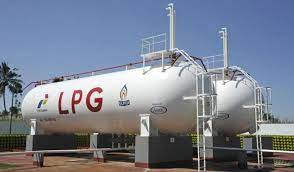
The Federal Government says Nigeria currently produces about five million tonnes of Liquefied Petroleum Gas (LPG) annually and only eight per cent of the production is being utilised domestically, with the bulk being exported.

RELATED POSTS

ECOFEST 2025: Addressing Key Challenges to Artistic Mobility within the Region

Senate Confirms Musa as Defence Minister

Culture and border fragilities: Experts call for a new preventive local diplomacy

It says domestic LPG production stands at about 45 per cent of annual consumption, with Nigerian Liquefied Natural Gas Limited (NLNG) supplying 450,000 metric tonnes per annum while 55 per cent is imported.

Dr Adeyemi Dipeolu, Special Adviser to the President on Economic Matters in the Office of the Vice President made this known on Wednesday at the India-Nigeria Liquefied Petroleum Gas (LPG) Summit Abuja, 2022.

The India-Nigeria LPG summit was hosted by Nigerian National Petroleum Company Limited (NNPC Ltd) with the support of the Office of the Vice President and World LPG Association (WLPGA).

The summit is expected to translate into bilateral exchanges to foster mutual collaboration and opportunities for the Nigerian LPG industry to learn from India’s experience, one of the world’s most successful National LPG penetration initiatives.

In a keynote address, Dipeolu said Nigeria had the ninth largest proven natural gas reserves in the world, and also the second largest producer of LPG in Africa after Algeria.

“LPG adoption in the Nigerian market, of course, is still very low with per capita consumption at about 1.8 kg, which is below the West African average.

“The household energy mix in Nigeria is about five per cent LPG, 65 per cent biomass and 30 per cent kerosene.

“The preference for the use of other sources is largely due to high switching costs associated with the acquisition of cylinders and LPG stoves, lack of awareness of associated benefits and safe LPG handling across consumer basis.

“There is also the high cost of LPG in comparison with alternative fuels, insufficient and inappropriate cylinders in circulation and inadequate infrastructure, especially trucks, roads, rail pipelines and plants,” he said.

He said the predominant use of biomass for household cooking resulted in deforestation and ambient air pollution, which also could lead to death due to stroke, heart disease, lung cancer and chronic respiratory diseases.

The Presidential Aide underscored the imperative for policies, incentives and investment to grow the Nigerian LPG market.

This, he said, would make cleaner fuel available, accessible and affordable, not only for household cooking, but also in autogas, captive power generation, heating and cooling as well as agriculture and industry.

He expressed optimism that Nigeria would learn from Indian’s experience with the Pradhan Mantri Ujjwala Yojana (PMUY) scheme implemented by the Indian Government in May 2016 such that LPG penetration in that country increased from 62 per cent to 100 per cent currently.

He said the theme of the summit, `Energising the Future: Leveraging the Indian Experience to Achieve Nigerian National LPG Aspiration’ underscored the need for cooperation and collaboration between the two countries.

Dipeolu said the cooperation should dwell on policy structures; health, safety and environmental methods and standards, ICT, infrastructure management techniques, stakeholder engagement and innovative programmes to incentivise Nigerian LPG market growth.

According to him, the recently enacted PIA specifically provides enablers for robust midstream and downstream gas development through promotion of policies, incentives and wavers to stimulate investments.

Others, he said, included removal of VAT on domestic LPG, presidential waiver on duty imported LPG equipment, tax holiday on new investment on gas and approval of eight new LPG terminals and storage facilities to add 150,000 metric tonnes gas capacity.

Tags: LPG
ShareTweetPin
The Matters Press

The Matters Press

Related Posts

ECOFEST 2025: Addressing Key Challenges to Artistic Mobility within the Region
Foreign

ECOFEST 2025: Addressing Key Challenges to Artistic Mobility within the Region

December 4, 2025
Senate Confirms Musa as Defence Minister
Energy

Senate Confirms Musa as Defence Minister

December 3, 2025
Culture and border fragilities: Experts call for a new preventive local diplomacy
Foreign

Culture and border fragilities: Experts call for a new preventive local diplomacy

December 3, 2025
West Africa: Cultural Stakeholders reimagine urban spaces to build TV peace
Energy

West Africa: Cultural Stakeholders reimagine urban spaces to build TV peace

December 3, 2025
Sow SARR Calls for Urgent Reform of West Africa’s Educational model
Economy/Technology

Sow SARR Calls for Urgent Reform of West Africa’s Educational model

December 3, 2025
Changes and crises in West Africa: what if culture was the solution?
Foreign

Changes and crises in West Africa: what if culture was the solution?

December 3, 2025
Next Post
Access Bank eyes top 5 positions in Africa

Access Bank plans to acquire majority equity stake in Angolan-based Finibanco

Nigeria in deal with firm to facilitate funding for houses

RSA for mortgage: PenOp says policy will boost economy

Recommended Stories

Maritime sector critical to economic growth — Shippers

ISPS Code is component of maritime security architecture – NIMASA

May 30, 2022
Abiodun inaugurates sub-Saharan Africa’s first fibre optic factory

Abiodun inaugurates sub-Saharan Africa’s first fibre optic factory

July 15, 2022
Buhari hosts ICAN President, praises professionals as livewire of economies

ICAN seeks solutions to rising inflation, brain drain

November 10, 2022

Popular Stories

  • Rising prices of goods cause protests in Morocco

    Rising prices of goods cause protests in Morocco

    0 shares
    Share 0 Tweet 0
  • NCC sets fresh operational fees, spectrum prices for telecom operators

    0 shares
    Share 0 Tweet 0
  • NLNG not responsible for gas supply shortfall, price hike

    0 shares
    Share 0 Tweet 0
  • Hoarding causes hike in prices of grains

    0 shares
    Share 0 Tweet 0
  • Prices of Petrol, diesel increase in November

    0 shares
    Share 0 Tweet 0
TheMattersPress

We bring you the best news update in Nigeria

LEARN MORE »

Recent Posts

  • ECOFEST 2025: Addressing Key Challenges to Artistic Mobility within the Region
  • Senate Confirms Musa as Defence Minister
  • Culture and border fragilities: Experts call for a new preventive local diplomacy

Categories

  • Agriculture
  • Economy/Technology
  • Energy
  • Entertainment/sports
  • Features
  • Foreign
  • Multimedia
  • Natural Resources
  • News
  • Oil and Gas
  • Photo
  • Politics
  • Security
  • Thematterspress
  • Uncategorized
  • Video

© 2025 Domo Tech World - Powered by Thematterspress.

No Result
View All Result
  • Home
  • News
  • Features
  • Thematterspress
  • Multimedia
    • Audio
    • Photo
    • Video
  • About us
  • Contact Us

© 2025 Domo Tech World - Powered by Thematterspress.

Welcome Back!

Login to your account below

Forgotten Password?

Retrieve your password

Please enter your username or email address to reset your password.

Log In
Call Us