• Privacy Policy
  • Terms
  • About us
  • Contact Us
  • Staff Email
Tuesday, August 18, 2026
  • Login
TheMattersPress
  • Home
  • News
  • Features
  • Thematterspress
  • Multimedia
    • Audio
    • Photo
    • Video
  • About us
  • Contact Us
No Result
View All Result
  • Home
  • News
  • Features
  • Thematterspress
  • Multimedia
    • Audio
    • Photo
    • Video
  • About us
  • Contact Us
No Result
View All Result
TheMattersPress
No Result
View All Result
Home Economy/Technology

Electricity bane of Nigeria’s manufacturing industry – AfDB

Electricity

The Matters Press by The Matters Press
July 14, 2023
Reading Time: 2 mins read
0
Strike puts Nigeria in darkness

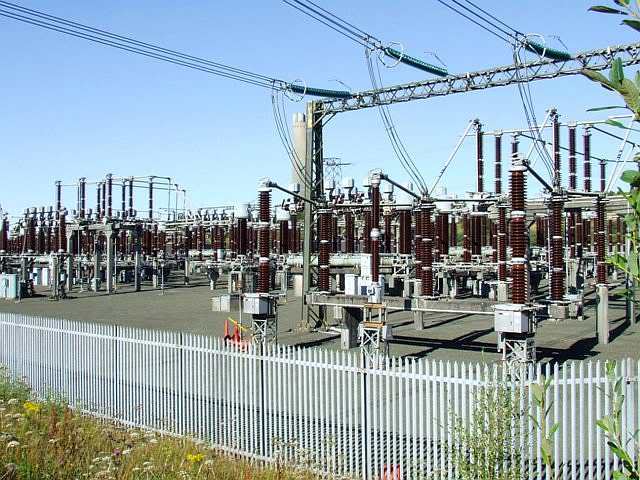
Electricity distribution station

Abuja, July 14, 2023: The President of African Development Bank (AfDB), Dr Akinwunmi Adesina, says lack of electricity among other factors limit industrial manufacturing in Nigeria.

RELATED POSTS

Tinubu’s era most peaceful period in Nigeria’s tertiary education since 1999 – TMSG

Military gets pay rise

Nigeria marches toward state police

The AfDB President, said this while presenting a lecture at the Business Day Chief Executive Officers (CEO) Forum in Lagos.

The lecture titled: “The Day the Lion Roared! Making Nigeria a Global Industrial and Economic Giant”.

”Today, capacity utilisation of factories hovers around 40 per cent compared to desired 70 per cent.

”The reality is that firms are moving to other neighbouring countries, where there is greater macroeconomic stability, enabling environment, with better ease of doing business.

”To be a manufacturer in Nigeria is not an easy venture. You succeed not because of ease of doing business, but by surmounting several constraints that limit industrial manufacturing.

”The major challenge facing the industry in Nigeria is the high cost and unreliability of supply of electricity,” he said.

According to him, the load shedding and unreliable power have made the cost of manufacturing extremely high and uncompetitive.

He said most manufacturing companies do self-provision on energy, with dependence on generators, diesel and heavy fuel oil.

According to the AfDB president, the emissions from these energy sources makes them brown industries and not green industries.

He said: ‘it has been estimated by the International Monetary Fund (IMF) that Nigeria loses 29 billion dollars annually due to lack of and unreliable power supply or 5.8 per cent of its GDP. ”

”Also, that Nigerians spend 14 billion dollars per year on generators and fuel.
” The Manufacturers Association of Nigeria, said industries spend N93.1 billion on alternative energy in 2018. No business can survive in Nigeria without generators.

”Unless Nigeria decisively tackles its energy deficiency and reliability, its industries will remain uncompetitive,” he said.

Adesina said there should be massive investments in gas to power.

He said it would ensure stable base-load power for industries, hydropower resources, large scale solar systems and direct power preferentially to industries.

This, he said would support industrial mini grids to concentrate power in industrial zones.

He called for more efficient utilities, reduce technical and non-technical losses in power generation, transmission, and distribution systems.

The AfDB boss said the bank had invested massively in the Nigeria’s power sector to support the implementation of the Power Sector Recovery Programme.

”The Bank provided 200 million dollars for the Nigeria Electrification Project, designed to fill the electricity access gap in Nigeria.

” We have also invested 257 million dollars in the Nigeria Transmission project, to strengthen grid power evacuation and regional interconnection.

”The Bank has inauguratef the Desert to Power initiative, a 20 billion dollar project to provide electricity for 250 million people across 11 countries of the Sahel, including Northern Nigeria.

”This initiative will draw lessons from successful projects already financed by the Bank, including the Noor Ouarzazate solar PV power project in Morocco and the Ben Ban solar project in Egypt,”he said.

Adesina said that industrial development was also constrained by poor state of transport, ports and logistic infrastructure.

On the Africa Continental Free Trade Area (AfCFTA), Adesina said it presented a huge opportunity for Nigeria to drive an export-driven industrial manufacturing pathway.

He urged Nigeria to take advantage of the opportunities therein to dive its economy.

Tags: Electricity
ShareTweetPin
The Matters Press

The Matters Press

Related Posts

Salvaging basic education from ruins of Boko Haram war in Borno
Economy/Technology

Tinubu’s era most peaceful period in Nigeria’s tertiary education since 1999 – TMSG

August 17, 2026
Economic implications of Niger coup to Nigeria, ECOWAS
Economy/Technology

Military gets pay rise

August 5, 2026
Police nab 233 officers for graft
News

Nigeria marches toward state police

August 4, 2026
Tinubu’s economic reforms encourage investment – UK
Energy

Nigeria today, terse position

August 2, 2026
Tinubu tells the world: Africa Does Not Wish to Replace Old Shackles With New Ones
Economy/Technology

Resilience, patriotic endurance of Nigerians keep Tinubu’s historic economic reforms alive

July 30, 2026
FG achieves economic growth in spite of global shocks – Minister
Economy/Technology

IMPI acknowledges Nigerians as ultimate hero of reforms as economy turns around

July 30, 2026
Next Post
Nigeria to rebase CPI, GDP

Digitalisation of MSMEs can increase Nigeria’s GDP by $50bn – NITDA

Economists Challenge IMF on call for further VAT increase in Nigeria

Targeted social spending crucial to mitigating removal of fuel subsidy - IMF

Recommended Stories

Value of China’s export to US dips

Chinese yuan strengthens to 6.3729 against USD

December 22, 2021
Experts validate Nigeria’s implementation strategies for success under AfCFTA

Federal, States, Council share N1.08trn November

December 16, 2023
SMEDAN to disburse N5.2m start-up grants to cooperatives

SMEDAN proposes establishment of D-8 centre on SMEs

October 26, 2022

Popular Stories

  • Rising prices of goods cause protests in Morocco

    Rising prices of goods cause protests in Morocco

    0 shares
    Share 0 Tweet 0
  • NCC sets fresh operational fees, spectrum prices for telecom operators

    0 shares
    Share 0 Tweet 0
  • NLNG not responsible for gas supply shortfall, price hike

    0 shares
    Share 0 Tweet 0
  • Hoarding causes hike in prices of grains

    0 shares
    Share 0 Tweet 0
  • Prices of Petrol, diesel increase in November

    0 shares
    Share 0 Tweet 0
TheMattersPress

We bring you the best news update in Nigeria

LEARN MORE »

Recent Posts

  • Tinubu’s era most peaceful period in Nigeria’s tertiary education since 1999 – TMSG
  • Military gets pay rise
  • Nigeria marches toward state police

Categories

  • Agriculture
  • Economy/Technology
  • Energy
  • Entertainment/sports
  • Features
  • Foreign
  • Multimedia
  • Natural Resources
  • News
  • Oil and Gas
  • Photo
  • Politics
  • Security
  • Thematterspress
  • Uncategorized
  • Video

© 2025 Domo Tech World - Powered by Thematterspress.

No Result
View All Result
  • Home
  • News
  • Features
  • Thematterspress
  • Multimedia
    • Audio
    • Photo
    • Video
  • About us
  • Contact Us

© 2025 Domo Tech World - Powered by Thematterspress.

Welcome Back!

Login to your account below

Forgotten Password?

Retrieve your password

Please enter your username or email address to reset your password.

Log In
Call Us