• Privacy Policy
  • Terms
  • About us
  • Contact Us
  • Staff Email
Wednesday, September 23, 2026
  • Login
TheMattersPress
  • Home
  • News
  • Features
  • Thematterspress
  • Multimedia
    • Audio
    • Photo
    • Video
  • About us
  • Contact Us
No Result
View All Result
  • Home
  • News
  • Features
  • Thematterspress
  • Multimedia
    • Audio
    • Photo
    • Video
  • About us
  • Contact Us
No Result
View All Result
TheMattersPress
No Result
View All Result
Home Economy/Technology

SMEs, backbone of many develop countries- CISLAC

SMEs

The Matters Press by The Matters Press
November 12, 2022
Reading Time: 2 mins read
0
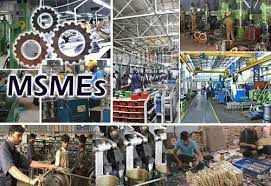
Nigeria disburses N56bn to MSMEs

Auwal Rafsanjani, Executive Director, Civil Society Legislative Advocacy Center (CISLAC), says it was well established that small and medium-sized enterprises (SMEs) are the backbone of many developed economies.

RELATED POSTS

BUILDING A $1 TRILLION ECONOMY: A Policy Challenge to Nigeria’s Opposition Parties

IMPI challenges presidential candidates to show Nigerians alternative, realistic path to $1tn economy

Finance bill 2027, a wake-up call to free trade zone stakeholders

Rafsanjani made this known at a stakeholders’ sensitisation and consultation meeting on fiscal support opportunities for mutual economic growth of SMEs and private corporations.

He said that they are important contributors to employment, output growth, and trade expansion and in Nigeria they remain critical constituents of the economy.

“According to a 2022 report jointly released by the Small and Medium Enterprises Development Agency of Nigeria (SMEDAN) and the National Bureau of Statistics (NBS), there are at least, 39.6 million micro, small and medium enterprises (MSMEs) operated in Nigeria as of December 2020.

“Accounting for 96.7 percent of businesses, 87.9 percent of employment, and 49.7 percent of national GDP. Totaling about 17.4 million enterprises.

“SMEs account for about 50 per cent of industrial jobs and nearly 90 per cent of activities in the manufacturing sector, in terms of number of enterprises.

“As you know, business death is the last stage of any business life cycle” he said.

He however said that despite having the highest entrepreneurship rate in the world with 22 per cent of Africa’s working-age population starting businesses.

According to the African Development Bank, 80 per cent of businesses in Africa fail within five years of starting up and at least 1.9 million SMEs have been lost since 2017 in Nigeria according to a 2020 PwC report.

He said it was instructive to note that obtaining finance remains the most pressing problem MSMEs face in Nigeria.

According to the National Bureau of Statistics (NBS), less than 5 per cent of SMEs have been able to access adequate finance for working capital and for funding business growth/expansion, Yet, SMEs still contribute a staggering 50 per cent to GDP.

To address these issues, he said that the Nigerian government has helped to fund businesses through a variety of government-backed organizations like the Small & Medium Enterprises Development Agency of Nigeria (SMEDAN).

Others are the Central Bank of Nigeria and Nigeria Incentive-Based Risk Sharing System for Agricultural Lending (NIRSAL Plc.), Nigerian Export-Import Bank, Bank of Industry, Bank of Agriculture and Development Bank of Nigeria) and has established several agencies to assist SMEs.

Furthermore, at least 26 of Nigeria’s 36 state governments have set up an SME development agency or office.

He said despite these seemingly significant efforts, challenges persist that hinder the growth and development of the sector.

Rafsanjani said thus, the need to support small businesses by providing insights, advice and support on access to finance and reducing financial liabilities, remains critical to increasing their chances to succeed in an often difficult environment.

He said that CISLAC workshop in partnership with the Nigeria Employers’ Consultative Association (NECA), and with support from Oxfam, was predicated on the above, towards strengthening fiscal opportunities through relevant consultations between SMEs, relevant government and professional agencies for mutual economic growth.

Tags: SMEs
ShareTweetPin
The Matters Press

The Matters Press

Related Posts

NLC’s insistence on eating the seed and expecting a harvest is a metaphor for an absurdity
Economy/Technology

BUILDING A $1 TRILLION ECONOMY: A Policy Challenge to Nigeria’s Opposition Parties

September 13, 2026
Tinubu steering Nigeria away from Venezuela-like tragedy – IMPI
Economy/Technology

IMPI challenges presidential candidates to show Nigerians alternative, realistic path to $1tn economy

September 13, 2026
Japan’s Sumitomo opens third plant in Phnom Penh’s SEZ
Economy/Technology

Finance bill 2027, a wake-up call to free trade zone stakeholders

August 30, 2026
NLC’s insistence on eating the seed and expecting a harvest is a metaphor for an absurdity
Economy/Technology

ATIKU’S FUEL SUBSIDY RESTORATION CAMPAIGN PROMISE FAILS LITMUS TEST OF PRACTICABILITY AND SUSTAINABILITY

August 28, 2026
Southeast, Southwest worry over Atiku’s six-year policy plan
Economy/Technology

Atiku proposal will reduce distributable revenue, constrict cash flow to sub-nationals – IMPI

August 25, 2026
Salvaging basic education from ruins of Boko Haram war in Borno
Economy/Technology

Tinubu’s era most peaceful period in Nigeria’s tertiary education since 1999 – TMSG

August 17, 2026
Next Post
Experts seek effective fiscal-monetary policy to tackle recession

Experts seek effective fiscal-monetary policy to tackle recession

Stakeholders unveil plan to upgrade catfish production

Fair to expose opportunities in fish, aquaculture value chain

Recommended Stories

We have nothing to hide – NNPC

NNPCL signs up to UN Global Compact

September 24, 2023
Stakeholders brainstorm on Nigeria’s energy transition plan

Nigeria invests on Energy support programme

April 3, 2024
Chevron, NNPC secure $1.4bn for drilling project

Lack of drilling investors cause decrease in crude oil production

July 3, 2024

Popular Stories

  • Rising prices of goods cause protests in Morocco

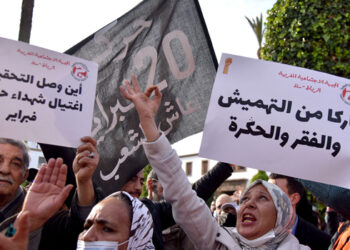
    Rising prices of goods cause protests in Morocco

    0 shares
    Share 0 Tweet 0
  • Hoarding causes hike in prices of grains

    0 shares
    Share 0 Tweet 0
  • NCC sets fresh operational fees, spectrum prices for telecom operators

    0 shares
    Share 0 Tweet 0
  • NLNG not responsible for gas supply shortfall, price hike

    0 shares
    Share 0 Tweet 0
  • Prices of Petrol, diesel increase in November

    0 shares
    Share 0 Tweet 0
TheMattersPress

We bring you the best news update in Nigeria

LEARN MORE »

Recent Posts

  • BUILDING A $1 TRILLION ECONOMY: A Policy Challenge to Nigeria’s Opposition Parties
  • IMPI challenges presidential candidates to show Nigerians alternative, realistic path to $1tn economy
  • Finance bill 2027, a wake-up call to free trade zone stakeholders

Categories

  • Agriculture
  • Economy/Technology
  • Energy
  • Entertainment/sports
  • Features
  • Foreign
  • Multimedia
  • Natural Resources
  • News
  • Oil and Gas
  • Photo
  • Politics
  • Security
  • Thematterspress
  • Uncategorized
  • Video

© 2025 Domo Tech World - Powered by Thematterspress.

No Result
View All Result
  • Home
  • News
  • Features
  • Thematterspress
  • Multimedia
    • Audio
    • Photo
    • Video
  • About us
  • Contact Us

© 2025 Domo Tech World - Powered by Thematterspress.

Welcome Back!

Login to your account below

Forgotten Password?

Retrieve your password

Please enter your username or email address to reset your password.

Log In
Call Us