• Privacy Policy
  • Terms
  • About us
  • Contact Us
  • Staff Email
Friday, September 18, 2026
  • Login
TheMattersPress
  • Home
  • News
  • Features
  • Thematterspress
  • Multimedia
    • Audio
    • Photo
    • Video
  • About us
  • Contact Us
No Result
View All Result
  • Home
  • News
  • Features
  • Thematterspress
  • Multimedia
    • Audio
    • Photo
    • Video
  • About us
  • Contact Us
No Result
View All Result
TheMattersPress
No Result
View All Result
Home Economy/Technology

Easier tariffs increase trade across East African region

Tariffs

The Matters Press by The Matters Press
January 22, 2023
Reading Time: 2 mins read
0
Easier tariffs increase trade across East African region

A reduction of non-tariff barriers and easing of Covid-19 restrictions are combining well to boost commerce in the East Africa, as seen the continued growth of the economies.

RELATED POSTS

BUILDING A $1 TRILLION ECONOMY: A Policy Challenge to Nigeria’s Opposition Parties

IMPI challenges presidential candidates to show Nigerians alternative, realistic path to $1tn economy

Finance bill 2027, a wake-up call to free trade zone stakeholders

This year, the EAC economies are expected to grow at 5.6 percent, compared with 5.1 last year.

Intra-EAC trade grew from $7.1 billion in 2019 to $9.5 billion in 2021. By September 2022, the EAC trade value was recorded at $10.17 billion, representing a 20 percent share of the global trade.

“Despite the devastation by the Covid-19 pandemic East Africa was the only region in Africa that escaped a recession in 2020,” said John Bosco Kalisa, CEO of the East Africa Business Council. “There has been significant reduction of NTBs, and our agriculture sector demonstrated a high level of resilience and performance is positive across the region.”

EABC says opening up the borders, especially between Uganda and Rwanda and Rwanda and Burundi, and efforts by Tanzania and Kenya to iron out trade disputes has helped increase movement of goods and people within the EAC.
Following the re-opening of the Katuna/Gatuna one-stop border post in January 2022, statistics show that 160 trucks and more than 1,000 people cross the border daily.

Kalisa said the decision by EAC partner states to reduce taxes on a number of items went a long way in supporting business recovery. Intra-EAC exports stood at $3.6 billion in 2021, having increased by 30 percent from $2.75 billion in 2020.

“The other factor is the decision by some countries to negotiate concessionary loan terms to boost economic units’ recovery. Rwanda, for instance, has the ‘manufacturing for recovery’ and they also have provided numerous fiscal incentives including lowering of some of the taxes,” said Kalisa.

Burundi reported a positive growth in its economy since the reopening of the border with Rwanda and the removal of economic sanctions by the EU.

“Following the removal of sanctions by the European Union and the United States of America, Burundi’s economy is on the right path,” said Denis Nshimirimana, Burundi Federal Chamber of Commerce and Industry.

“In fact, the Central Bank of Burundi lifted the ban on forex bureaus in October 2022. These positive developments are set to ease access to forex for businesses.”

Burundi’s imports from the EAC bloc in 2021 stood at $199.8 million and exports at $15 million, according to the International Trade Centre.

EAC Secretary-General Dr Peter Mathuki attributed the increase in intra-regional trade to political goodwill among the members.

“A high-level discussion among the heads of state eliminated many NTBs. Some 257 NTBs have been resolved since 2007. This is in tandem with the bloc’s goal to increase the volumes of intra-regional trade,” Dr Mathuki said.

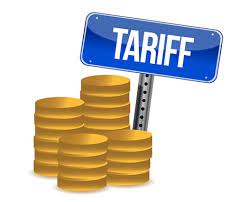
The adaptation of the fourth band of EAC Common External Tariff (35 percent) has also contributed to the increase in EAC trade.

CET is one of the key instruments under the Customs Union pillar, which justifies regional integration through uniform treatment of goods imported from third parties.

Since July 2022, imports of locally available goods into the region, such as meat, furniture and textiles, have been attracting a tariff of 35 percent.
The East African

Tags: East AfricaTariffs
ShareTweetPin
The Matters Press

The Matters Press

Related Posts

NLC’s insistence on eating the seed and expecting a harvest is a metaphor for an absurdity
Economy/Technology

BUILDING A $1 TRILLION ECONOMY: A Policy Challenge to Nigeria’s Opposition Parties

September 13, 2026
Tinubu steering Nigeria away from Venezuela-like tragedy – IMPI
Economy/Technology

IMPI challenges presidential candidates to show Nigerians alternative, realistic path to $1tn economy

September 13, 2026
Japan’s Sumitomo opens third plant in Phnom Penh’s SEZ
Economy/Technology

Finance bill 2027, a wake-up call to free trade zone stakeholders

August 30, 2026
NLC’s insistence on eating the seed and expecting a harvest is a metaphor for an absurdity
Economy/Technology

ATIKU’S FUEL SUBSIDY RESTORATION CAMPAIGN PROMISE FAILS LITMUS TEST OF PRACTICABILITY AND SUSTAINABILITY

August 28, 2026
Southeast, Southwest worry over Atiku’s six-year policy plan
Economy/Technology

Atiku proposal will reduce distributable revenue, constrict cash flow to sub-nationals – IMPI

August 25, 2026
Salvaging basic education from ruins of Boko Haram war in Borno
Economy/Technology

Tinubu’s era most peaceful period in Nigeria’s tertiary education since 1999 – TMSG

August 17, 2026
Next Post
Google parent Alphabet to cut 12,000 jobs worldwide

Google parent Alphabet to cut 12,000 jobs worldwide

Oil field in Somali

Oil company reaffirms commitment to host community’s development

Recommended Stories

Property owners besiege FCT office to pay ground rent

“We don’t have any issue against Wike over salary fuss” – Workers

October 30, 2023
South East rail in progress, Amaechi assures Igbo

Lagos-Calabar rail for inauguration September

April 7, 2022
CISLAC calls for more accountability in extractive sector

CISLAC calls for more accountability in extractive sector

June 23, 2022

Popular Stories

  • Rising prices of goods cause protests in Morocco

    Rising prices of goods cause protests in Morocco

    0 shares
    Share 0 Tweet 0
  • Hoarding causes hike in prices of grains

    0 shares
    Share 0 Tweet 0
  • NCC sets fresh operational fees, spectrum prices for telecom operators

    0 shares
    Share 0 Tweet 0
  • NLNG not responsible for gas supply shortfall, price hike

    0 shares
    Share 0 Tweet 0
  • Prices of Petrol, diesel increase in November

    0 shares
    Share 0 Tweet 0
TheMattersPress

We bring you the best news update in Nigeria

LEARN MORE »

Recent Posts

  • BUILDING A $1 TRILLION ECONOMY: A Policy Challenge to Nigeria’s Opposition Parties
  • IMPI challenges presidential candidates to show Nigerians alternative, realistic path to $1tn economy
  • Finance bill 2027, a wake-up call to free trade zone stakeholders

Categories

  • Agriculture
  • Economy/Technology
  • Energy
  • Entertainment/sports
  • Features
  • Foreign
  • Multimedia
  • Natural Resources
  • News
  • Oil and Gas
  • Photo
  • Politics
  • Security
  • Thematterspress
  • Uncategorized
  • Video

© 2025 Domo Tech World - Powered by Thematterspress.

No Result
View All Result
  • Home
  • News
  • Features
  • Thematterspress
  • Multimedia
    • Audio
    • Photo
    • Video
  • About us
  • Contact Us

© 2025 Domo Tech World - Powered by Thematterspress.

Welcome Back!

Login to your account below

Forgotten Password?

Retrieve your password

Please enter your username or email address to reset your password.

Log In
Call Us