• Privacy Policy
  • Terms
  • About us
  • Contact Us
  • Staff Email
Wednesday, April 15, 2026
  • Login
TheMattersPress
  • Home
  • News
  • Features
  • Thematterspress
  • Multimedia
    • Audio
    • Photo
    • Video
  • About us
  • Contact Us
No Result
View All Result
  • Home
  • News
  • Features
  • Thematterspress
  • Multimedia
    • Audio
    • Photo
    • Video
  • About us
  • Contact Us
No Result
View All Result
TheMattersPress
No Result
View All Result
Home Economy/Technology

AfDB urges diversification of Nigeria’s export, revenue bases

AfDB

The Matters Press by The Matters Press
July 11, 2023
Reading Time: 2 mins read
0
Egypt’s economic strides excite AfDB

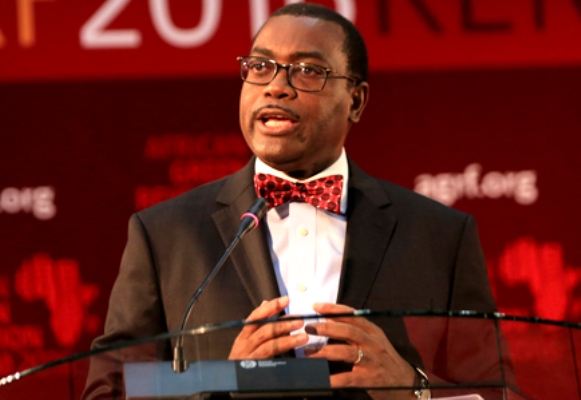
Akinwunmi Adesina. AfDB's President

Abuja, July 11, 2023: The African Development Bank (AfDB) has urged the diversification of Nigeria’s export, revenue bases and trade facilitation capacity to boost revenue generation potential.

RELATED POSTS

TMSG to ADC: You are a motley crew of power mongers, palace jesters

NLC’s insistence on eating the seed and expecting a harvest is a metaphor for an absurdity

Why Nigeria must use oil windfall to build a more resilient economy – IMPI

The AfDB President, Dr Akinwumi Adesina, said this at the second edition of the Nigeria Employers’ Summit on Monday in Abuja.

The theme of the summit was, “Trade and Non-Oil: Changing the Narratives for Rapid National Development.”

The summit has as its theme, “Trade and Non-Oil: Changing the Narratives for Rapid National Development.

Adesina, represented by Mr Lamin Barrow, the Director-General, Nigeria Country Department of AfDB, said the measures would address some major risk faced by the country.

According to him, Nigeria like many other oil-exporting countries, faces several challenges related to global commodity price volatilities.

He said that the key challenge was the fiscal risks associated with overdependence on oil exports for fiscal revenues.

”Nigeria’s economy is one of the most diversified in Africa, with the oil sector accounting for less than 10 per cent of the Gross Domestic Product (GDP) with the non-oil sectors accounting for more than 90 per cent.

“The key challenge is revenue concentration.

”The oil sector accounts for 75 per cent of export revenues and 50 per cent of all government revenue, underscoring the vulnerability of the economy to oil-related shocks.

”This is aggravated by low trade volumes, particularly for manufactured exports, and underdeveloped agriculture value chains,” he said.

Adesina noted that Nigeria’s exports of goods and services as a percentage of the GDP, at 10.7 per cent, was the lowest among its middle-income peers in Africa.

He compared this to 31.2 per cent for South Africa, 44 per cent for Mauritius, 44.6 per cent for Botswana while Tunisia and Angola stood at 42.1per cent and 44.3 per cent, respectively.

Adesina said the limited non-oil exports had exposed the country to the vagaries of global oil markets with attendant adverse impacts on the fiscal space and constraining development spending.

He said while the share of manufacturing in Nigeria’s GDP had remained around seven per cent, the performance of the sector had deteriorated in the past five years.

”Nigeria’s manufacturing exports represent only three per cent of total revenues from exports, but accounts for 50 per cent of imports.

”Instead of being forward looking in expanding the share of manufactured goods export, Nigeria currently focuses on import substitution model.

”Instead of looking to create wealth through export market development and product diversification. Consequently, Nigeria remains a net food importer.

”Between 2010 and 2020, the annual food import bill averaged $6.4 billion while earning $1.2 billion annually, on average, from its food exports over the same period,” he explained.

Adesina said the revenue concentration was compounded by a poorly performing agricultural sector characterised by limited mechanisation, low productivity and underdeveloped value chains.

The AfDB boss listed macro-economic as a major bottleneck limiting full exploitation of the non-oil sectors of the economy.

He added that low productivity, inadequate access to credit for Small and Medium Enterprises, infrastructure and logistics deficiencies, especially inadequate power supply were the key challenges.


Tags: AfDB
ShareTweetPin
The Matters Press

The Matters Press

Related Posts

TMSG to ADC: You are a motley crew of power mongers, palace jesters
Economy/Technology

TMSG to ADC: You are a motley crew of power mongers, palace jesters

April 6, 2026
NLC’s insistence on eating the seed and expecting a harvest is a metaphor for an absurdity
Economy/Technology

NLC’s insistence on eating the seed and expecting a harvest is a metaphor for an absurdity

April 3, 2026
Presidential aides hail IMPI’s boss, Akinsiju at 63, commend his role in advancing Nigeria’s reform.
Economy/Technology

Why Nigeria must use oil windfall to build a more resilient economy – IMPI

March 30, 2026
Tanzania, Australia firms sign $667m deal to mine rare earths
Economy/Technology

$1.3bn landmark FG/AFC Alumnia deal, transformative economic booster–TMV

March 7, 2026
Eulogising Africa’s efforts in midwifing a Covid-19 vaccine
Economy/Technology

Injection of N98bn in 13,500 Centres will Boost Primary Healthcare Nationwide – Group

March 7, 2026
CAC, Pakistani investors on economic diversification
Economy/Technology

Progressivism: The Place of Ideology in Tinubu’s Management of Nigeria’s Economy

March 1, 2026
Next Post
SON sure to certify 75% products in Enugu, Ebonyi states by 2023

SON awards certificates to 12 indigenous companies in Enugu

NCDMB to host local content investment forum

NCDMB commits to oil, gas mandate implementation

Recommended Stories

3,000 manufacturers to attend global fair on industrial solution in Lagos

Manufacturers from Qatar, Nigeria to cooperate

March 3, 2022
Nigeria targets Trans Saharan, Europe gas market

Nigeria seeks America’s funding to support gas resources

March 12, 2022
$27.3bn lost to salinity-induced soil degradation annually–SSSN

Stakeholders score Nigerian fertiliser sector high

April 4, 2023

Popular Stories

  • Rising prices of goods cause protests in Morocco

    Rising prices of goods cause protests in Morocco

    0 shares
    Share 0 Tweet 0
  • NCC sets fresh operational fees, spectrum prices for telecom operators

    0 shares
    Share 0 Tweet 0
  • NLNG not responsible for gas supply shortfall, price hike

    0 shares
    Share 0 Tweet 0
  • Hoarding causes hike in prices of grains

    0 shares
    Share 0 Tweet 0
  • Prices of Petrol, diesel increase in November

    0 shares
    Share 0 Tweet 0
TheMattersPress

We bring you the best news update in Nigeria

LEARN MORE »

Recent Posts

  • TMSG to ADC: You are a motley crew of power mongers, palace jesters
  • NLC’s insistence on eating the seed and expecting a harvest is a metaphor for an absurdity
  • Why Nigeria must use oil windfall to build a more resilient economy – IMPI

Categories

  • Agriculture
  • Economy/Technology
  • Energy
  • Entertainment/sports
  • Features
  • Foreign
  • Multimedia
  • Natural Resources
  • News
  • Oil and Gas
  • Photo
  • Politics
  • Security
  • Thematterspress
  • Uncategorized
  • Video

© 2025 Domo Tech World - Powered by Thematterspress.

No Result
View All Result
  • Home
  • News
  • Features
  • Thematterspress
  • Multimedia
    • Audio
    • Photo
    • Video
  • About us
  • Contact Us

© 2025 Domo Tech World - Powered by Thematterspress.

Welcome Back!

Login to your account below

Forgotten Password?

Retrieve your password

Please enter your username or email address to reset your password.

Log In
Call Us