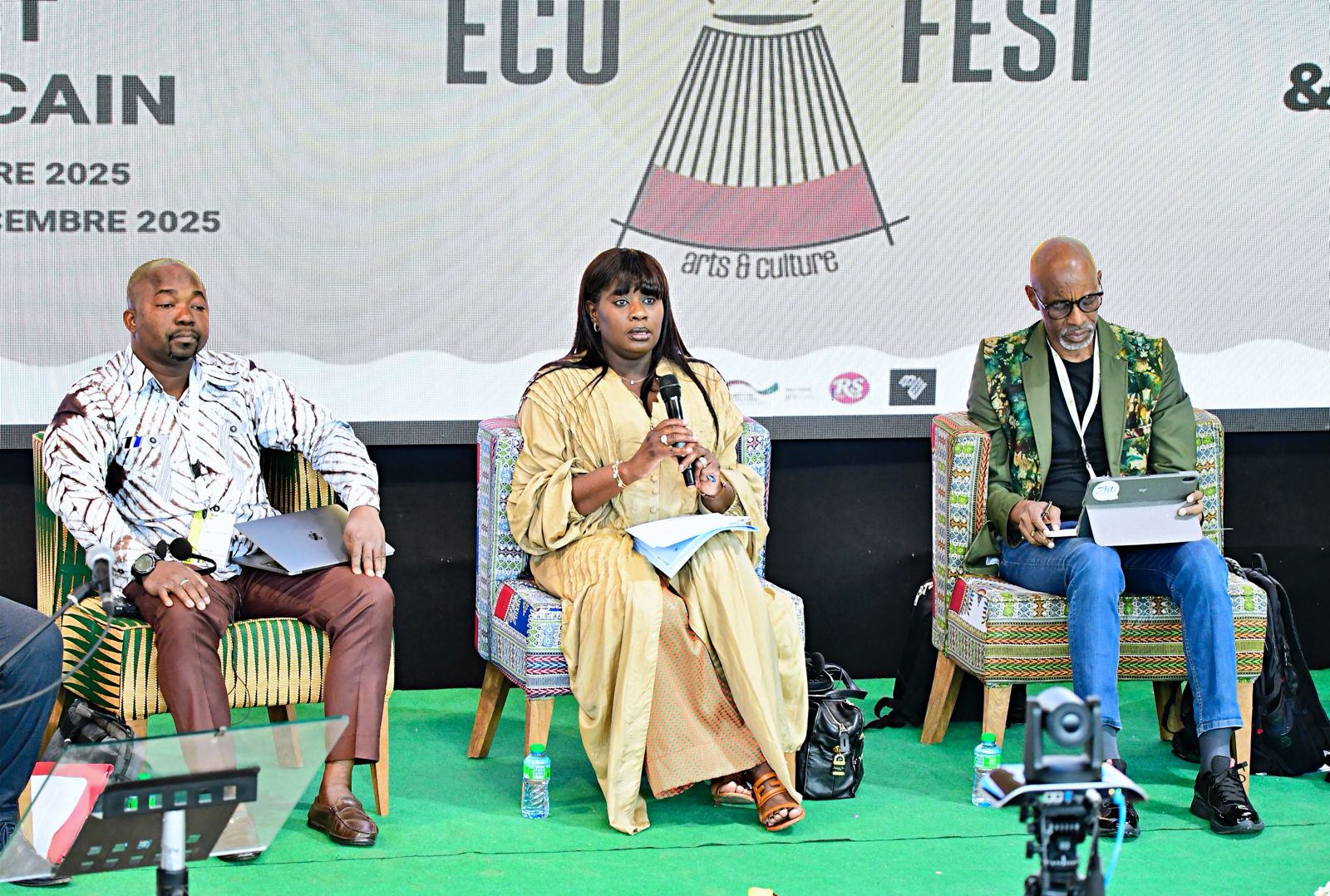
As part of the inaugural West African Festival of Arts and Culture (ECOFEST), West African cultural stakeholders engaged in an in-depth discussion on the barriers impeding the free movement of artists and their works within the ECOWAS community at the Museum of Black Civilisations.
Marième Bâ, Secretary-general of the Biennale of Contemporary African Art (Dak’art), and Aboubacar Ouango from Burkina Faso’s Pan-African Film and Television Festival of Ouagadougou (FESPACO) presented frank assessments along with strong recommendations in front of a large audience.
Marième Bâ highlighted the scale of the Dak’art Biennale, which can host up to 150 nationalities, expressing concern over regional logistical challenges undermining its international dynamism.
“While we can receive artworks from the Caribbean or the United States in less than five days, it sometimes takes 15 to 30 days for a work to arrive from Côte d’Ivoire,” she said.
This delay is mainly due to customs procedures, high inter-regional transport costs, and lack of harmonization within ECOWAS regulations, heavily impacting the Biennale’s budget, much of which goes to transporting artworks.
She also emphasized a major hurdle: many regional artists submit dossiers of insufficient quality.
“They have the talent, but often lack the means to present their work effectively,” she said, noting difficulties for international selection committees to identify professional profiles. This structural weakness limits mobility, visibility, and opportunities for African artists themselves, who paradoxically receive more recognition from foreign institutions than from their continental neighbours.
Aboubacar Ouango made a similar observation for the cinema sector. Although the ECOWAS Free Movement Protocol exists, “its implementation on the ground leaves much to be desired.” He deplored border harassment, administrative arbitrariness, and delays in authorization that continue to hinder the mobility of artists and their technical teams.
“The mechanisms exist, but their application remains very difficult,” he insisted, recalling that even travel between border towns can become a real obstacle course.
To improve the situation, the speakers made several recommendations. Marième Bâ advocated for greater administrative flexibility, including customs facilitation for all official events and “off” programmes, institutional support for artists during their stay in Senegal, and logistical assistance for transporting artworks.
Aboubacar Ouango stressed the need to strengthen audio-visual co-productions between African countries, promote technical synergies, and increase media education initiatives targeting young audiences. He also proposed launching border awareness campaigns to reduce harassment and better publicize free movement mechanisms.
In conclusion, the ECOFEST panel highlighted the urgent need for coordinated action to transform the ECOWAS space into a genuine territory of fluid and dynamic cultural exchange, an essential condition for African artists to move freely, collaborate effectively, and shine both at home and internationally.

ECOFEST 2025: Addressing Key Challenges to Artistic Mobility within the Region
ECOFEST

Related Posts







We bring you the best news update in Nigeria
LEARN MORE »