• Privacy Policy
  • Terms
  • About us
  • Contact Us
  • Staff Email
Friday, May 22, 2026
  • Login
TheMattersPress
  • Home
  • News
  • Features
  • Thematterspress
  • Multimedia
    • Audio
    • Photo
    • Video
  • About us
  • Contact Us
No Result
View All Result
  • Home
  • News
  • Features
  • Thematterspress
  • Multimedia
    • Audio
    • Photo
    • Video
  • About us
  • Contact Us
No Result
View All Result
TheMattersPress
No Result
View All Result
Home Foreign

Restitution and Protection of Cultural Property: Felwine Sarr Calls for “Reimagining the African Museum”

Culture

The Matters Press by The Matters Press
December 5, 2025
Reading Time: 2 mins read
0
Restitution and Protection of Cultural Property: Felwine Sarr Calls for “Reimagining the African Museum”

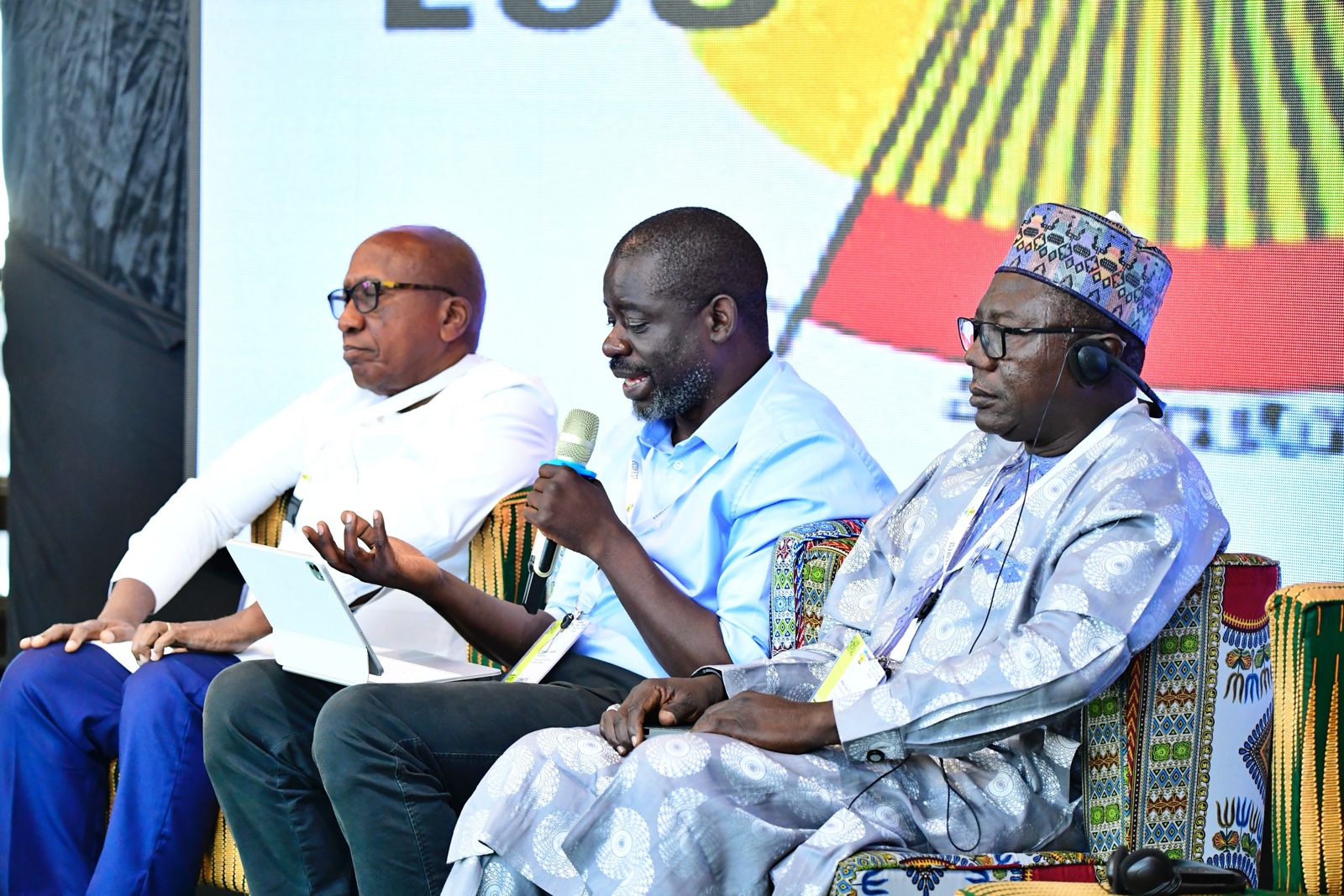
The Museum of Black Civilisations (MCN) in Dakar hosted, on Thursday 4 December, several cultural actors and experts, including the Senegalese economist and thinker Felwine Sarr. At the heart of the discussions was a panel on “Restitution and Protection of Cultural Property”, organised as part of the Professional Meetings of the inaugural edition of the West African Festival of Arts and Culture (ECOFEST 2025).
Addressing a large audience, the author of Afrotopia called for a deep reconsideration of the museum, its history, its functions, and the narratives it upholds as African artworks dispersed across Western museums gradually return to the continent.
From the outset, Felwine Sarr stressed that restitution cannot be treated as a simple “transfer of objects from one place to another.” This return, he explained, “opens a far more profound question: the resocialisation of the objects, the meaning attributed to them, the spaces in which they are placed, and what this implies for the social body.”
According to him, “understanding the contemporary issues surrounding restitution requires returning to the origins of the Western museum, which emerged in the 19th century as a site of identity-affirmation, mandated to conserve the inalienable heritage of emerging nations”.
However, with colonisation, this model was distorted. He noted that “European expansion was accompanied by a massive expropriation of the cultural property of colonised peoples.”
Ethnographic museums then became, in his words, “museums of others”, housing objects that were interpreted and displayed in the absence of their creators. This displacement was accompanied by a process of “re-signification”: ritual objects were turned into ethnographic specimens or works of art, thereby losing part of their original meaning and social function.
“Their significance is altered; the scope of these objects is reduced,” he lamented, raising a fundamental question: “Has the object become something else? Can its original significance be restored, or must a new one be constructed?”
Sarr emphasised that the decolonisation of the museum requires the “pluralisation of narratives “He pointed to North American experiences where First Nations communities co-curate exhibitions.
However, he insisted that the most pressing challenge lies within Africa itself: to rethink museum institutions, their ecosystems, and their modes of display. The museum imported from the colonial model, he argued, is not a neutral framework.
“We must reimagine our own heritage systems and the spaces themselves,” he argued.
This involves drawing from precolonial traditions of royal, ritual, and contextual forms of display, in order to invent museum models suited to contemporary African societies.
Felwine Sarr also reflected on the notion of the universal, often invoked by major museums such as the Louvre to justify the possession of artworks originating elsewhere. The universal, he explained, is “performed” declared by those who claim custodianship of it.
Conversely, restitution and diversification of cultural spaces would help build a “pluriversal” approach—an understanding of the universal rooted in a plurality of cultural centres and voices.
“Objects in Dakar or Cotonou are just as universal as those in Paris,” he affirmed.
In conclusion, he praised the Museum of Black Civilisations, describing it as a “non-subaltern museum”, dynamic, open to transformation and creativity. It is, in his view, “an ideal model capable of restoring meaning to returned objects and, more broadly, renewing the narratives that African societies tell about themselves”.

RELATED POSTS

IN DEFENCE OF PRESIDENT TINUBU’S DEBTS-FOR-INFRASTRUCTURE POLICY

Tinubu’s economic reforms grow Nigeria’s export earnings by 38.68% – TMV

Tinubu engages global investors in Paris

Tags: Culture
ShareTweetPin
The Matters Press

The Matters Press

Related Posts

Nigeria’s  Transparent Civil Service Recruitment exciting
Economy/Technology

IN DEFENCE OF PRESIDENT TINUBU’S DEBTS-FOR-INFRASTRUCTURE POLICY

May 18, 2026
Council seeks incentives to boost indigenous ship operations
Economy/Technology

Tinubu’s economic reforms grow Nigeria’s export earnings by 38.68% – TMV

May 7, 2026
Tinubu engages global investors in Paris
Economy/Technology

Tinubu engages global investors in Paris

May 6, 2026
TMSG to ADC: You are a motley crew of power mongers, palace jesters
Economy/Technology

Tinubu vindicated as opposition coalition collapsed under the weight of Atiku, Obi’s lust for power-Group

May 6, 2026
Tinubu explains mission as he marks second year in office
Economy/Technology

IMPI faults opposition, rates Tinubu’s policies successful, as Naira succeeds as Africa’s second-best-performing currency against dollar

April 29, 2026
NLC’s insistence on eating the seed and expecting a harvest is a metaphor for an absurdity
Economy/Technology

ANALYSIS: HOW TINUBU’S REFORMS TRIGGER HIGH REVENUE EARNINGS IN NIGERIA’S REAL SECTOR

April 29, 2026
Next Post
ECOFEST 2025: A facet of African cultural engineering showcased in the digital pavilions

ECOFEST 2025: A facet of African cultural engineering showcased in the digital pavilions

Nigerians kick against re-opening of schools as COVID-19 bites harder

Disbursement of N4.7b TVET stipends, way to go in skill acquisition - TMV

Recommended Stories

Osinbajo, Jonathan at Dunamis Dom launch

Nigeria’s social programme to mitigate poverty

November 30, 2018
Infrastructure gulp N2,7tn in Nigeria

PPP will grow Nigeria’s tech infrastructure – Presidency

December 19, 2021
Kenya households, investors at crossroads over Treasury, CBK policy

Kenya debt stock surpasses $69bn

September 22, 2023

Popular Stories

  • Rising prices of goods cause protests in Morocco

    Rising prices of goods cause protests in Morocco

    0 shares
    Share 0 Tweet 0
  • NCC sets fresh operational fees, spectrum prices for telecom operators

    0 shares
    Share 0 Tweet 0
  • NLNG not responsible for gas supply shortfall, price hike

    0 shares
    Share 0 Tweet 0
  • Hoarding causes hike in prices of grains

    0 shares
    Share 0 Tweet 0
  • Prices of Petrol, diesel increase in November

    0 shares
    Share 0 Tweet 0
TheMattersPress

We bring you the best news update in Nigeria

LEARN MORE »

Recent Posts

  • IN DEFENCE OF PRESIDENT TINUBU’S DEBTS-FOR-INFRASTRUCTURE POLICY
  • Tinubu’s economic reforms grow Nigeria’s export earnings by 38.68% – TMV
  • Tinubu engages global investors in Paris

Categories

  • Agriculture
  • Economy/Technology
  • Energy
  • Entertainment/sports
  • Features
  • Foreign
  • Multimedia
  • Natural Resources
  • News
  • Oil and Gas
  • Photo
  • Politics
  • Security
  • Thematterspress
  • Uncategorized
  • Video

© 2025 Domo Tech World - Powered by Thematterspress.

No Result
View All Result
  • Home
  • News
  • Features
  • Thematterspress
  • Multimedia
    • Audio
    • Photo
    • Video
  • About us
  • Contact Us

© 2025 Domo Tech World - Powered by Thematterspress.

Welcome Back!

Login to your account below

Forgotten Password?

Retrieve your password

Please enter your username or email address to reset your password.

Log In
Call Us