
POLICY STATEMENT 041 ISSUED BY THE INDEPENDENT MEDIA AND POLICY INITIATIVE (IMPI)
ATIKU’S FUEL SUBSIDY RESTORATION CAMPAIGN PROMISE FAILS LITMUS TEST OF PRACTICABILITY AND SUSTAINABILITY*
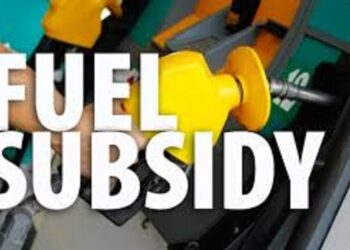
Former Vice President and Presidential Candidate of the African Democratic Congress (ADC), Alhaji Atiku Abubakar, has without doubt ruffled the nation’s political sphere with his sudden and curious volte-face on his well-known advocacy on fuel subsidy removal and deregulation of the petroleum sector of the larger economy.
We consider his declared commitment to restoring the petrol subsidy foundational to his presidential campaign promise and a response to calls from citizens across parties for presidential candidates to present manifestoes and take a position on alternatives to the incumbent federal administration’s policies.
But Atiku’s sudden policy U-turn, in our estimation, is a disingenuous attempt to exploit the current economic adjustments for short-term political gains and an unbridled play at cheap opportunism. We find it contradictory that a candidate who campaigned vigorously on a platform of total economic deregulation in 2023 now proposes returning Nigeria to an opaque, corrupt, multi-trillion-naira subsidy regime that systematically enriched market syndicates at the expense of ordinary citizens and the subnationals.
Under his proposed Atiku Economic Recovery Plan (AERP), the former Vice President outlines a model structured around production rather than consumption. He proposes shifting the subsidy from “importation to production,” transferring incentives directly from middlemen traders to local Nigerian refineries. Eligible public and private local refineries will receive domestic crude allocations at a discounted price, on the condition that refinery operators qualify for discounted crude only if they pass the exact savings on to consumers.
In his view, this depends on an independently verified, transparent pricing formula for refined products supplied to the Nigerian market. According to him, the entire programme will operate under a strict, pre-determined annual budget ceiling approved by the National Assembly.
However, from a political economy framework, this policy proposal operates on a dual axis. It exploits immediate social discontent over the rising cost of living while introducing long-term structural risks to Nigeria’s fragile fiscal framework.
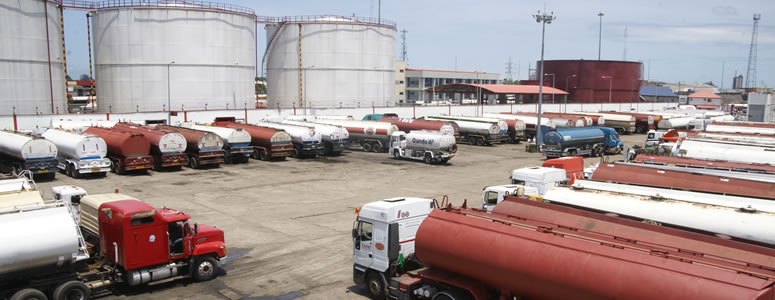
Despite its popular appeal, fuel subsidies are inherently regressive economic tools. Wealthier households with multiple vehicles consume a disproportionate volume of petrol compared to the poorest demographics, who rely primarily on public transport or lack electricity access entirely. A fuel subsidy acts as a fiscal illusion. It changes where the cost is paid, rather than eliminating the cost itself.
*Reintroducing Opaque “At-Source” Deductions*
Historically, Nigeria’s fiscal morbidity, which ultimately led to infrastructure funding collapse, followed the federal government deducting subsidy costs “at source” from national oil revenues before the money could reach the Federation Account. This arbitrary deduction left state and local governments financially crippled.
Atiku’s model repeats this exact pattern. By giving discounted crude oil directly to local refineries, the government creates a massive hidden deduction. This directly reduces the revenue flowing into the Federation Account, stripping state and local government leaders of the liquid capital needed to build rural feeder roads, primary healthcare centres, and community water infrastructure.
*The Resource Curse and Wealth Illusion*
Atiku’s model finds connection to the resource curse and wealth illusion that exemplify the economic waywardness of Nigeria’s past. Following the oil booms of the 1970s, Nigeria adopted an opaque fiscal framework where volatile oil revenues were treated as infinite cash flow rather than capital to be reinvested. Instead of channelling oil windfalls into building national power grids, deep-sea ports, and industrial rail lines, successive administrations used these funds to heavily subsidise imported petrol, with little consequential microeconomic impact.
We capture this in a snapshot by aggregating Nigeria’s fiscal losses over the ten years leading up to 2023, when Nigeria spent over ₦11 trillion on petrol subsidies. This sum routinely exceeded the combined national budgets for healthcare, education, and defence. This massive expenditure is central to Nigeria’s lack of modern infrastructure: the national treasury has historically prioritised burning liquid cash at the pump over investing in productive infrastructure. Alhaji Atiku Abubakar’s proposed model tries to escape this criticism by focusing on “production rather than consumption” via crude oil discounts.
However, a political economy analysis shows that this approach still repeats Nigeria’s historical developmental errors.
This reckless, populist proposal represents a dangerous step backwards and a financial trap that would bankrupt Nigeria, destroy the country’s sovereign credit ratings, and wipe out the economic progress made over the past three years.
Atiku’s proposal to re-regulate prices not only directly undermines the Petroleum Industry Act (PIA) 2021, but also creates an illusion of price reduction. Fixed price caps remove commercial incentives for marketers to distribute fuel to remote areas; consequently, fuel supplies would shift to high-volume urban markets like Lagos, Abuja, Kano, and Port Harcourt.
This creates a long-forgotten black-market premium, with remote filling stations running dry and agricultural transport trucks forced to buy fuel from informal black-market vendors. This pushes long-term transport fares up to 40% above current deregulated market rates, accelerating food inflation in cities and leaving rural farmers with lower profits.
Besides forcing commercial entities like NNPC Limited or private refineries into complex, politically mandated pricing formulas, Atiku’s proposal also sends signals to global markets that Nigeria lacks regulatory predictability. This policy shift would scare away international capital and freeze modern Public-Private Partnerships (PPPs), with repercussions for funding critical legacy infrastructure projects and a damning effect on production and productivity.
We reiterate that Nigeria’s historical infrastructure deficit cannot be solved by returning to the fiscal policies that created it. Atiku Abubakar’s “Follow-the-Barrel” model replaces a cash subsidy with a crude oil revenue discount. This policy choice risks locking Nigeria back into the same historical cycle: prioritising temporary, popular relief at the pump, while sacrificing the high-quality roads, hospitals, schools, and energy networks required to build a productive national economy.
*Shortchanging the Poor and a Double Whammy of Debt Explosion and Runaway Inflation*
Numerous studies have proven that fuel subsidies are inherently regressive. Taxpayer money is disproportionately used to subsidise the fuel consumption of wealthy, multi-vehicle urban households, while completely shortchanging the rural and urban poor who rely on public services. This is also because Nigeria’s non-oil revenue cannot sustain a multi-trillion Naira consumption subsidy; funding Atiku’s plan would require aggressive, unsustainable sovereign borrowing. This would trigger hyperinflation, rapidly devalue the Naira, and completely dry up credit for private businesses and informal artisans.
*Technical Critique Against Existing Structural Concerns*
While Atiku’s model addresses past flaws like phantom import cargoes and retrospective claims, it fails to withstand the legal, macroeconomic, and institutional friction points facing Nigeria:
*THE LEGAL FAILURE: THE PIA 2021 BARRIER*
Atiku’s model relies on allocating domestic crude to refineries at preferential, below-market prices. This directly violates the Petroleum Industry Act (PIA) 2021, which makes NNPC Limited a fully commercial entity and legally binds it to sell its crude equity at global, market-reflective rates (Official Selling Price).
Forcing NNPC Ltd to accept discounts would require amending the PIA through the National Assembly, reopening deep political and legislative battles.
In his bid to justify his model, Atiku states that crude discounts are a manageable “opportunity cost” rather than a cash exit. From a fiscal economics standpoint, however, this distinction is largely academic. Giving up market-value dollar revenues on crude sales shrinks the total revenue paid into the Federation Account. The net result matches the old model: less cash distributed through the Federation Account Allocation Committee (FAAC), immediately strangling state and local government capital budgets.
*SOVEREIGN CREDIT AND INVESTOR CONFIDENCE DEFICIT*
We highlight more significant threats to the country’s economic well-being by projecting international rating agencies’ likely responses to Atiku’s declaration to restore the fuel subsidy. We note that while a capped budget framework limits open-ended liabilities, international rating agencies like Fitch and S&P focus heavily on structural policy reversals.
Reintroducing price controls, even under a production model, signals that Nigeria’s long-term investment rules are volatile. This policy shift would trigger sell-offs in Nigeria’s Eurobonds, spike sovereign yields, and block the country from accessing affordable global capital.
Relatedly, the model aims to protect local refining, but price caps hurt refinery margins. Private mega-facilities like the Dangote Refinery rely on global pricing logic to service their multi-billion-dollar commercial bank loans. Forcing refineries into complex pricing formulas increases regulatory risk, endangers their cash flows and threatens a rise in Non-Performing Loans (NPLs) across the banking sector.
On the global financing front, the World Bank and IMF evaluate actual market distortions rather than accounting labels. Because the model artificially lowers local energy prices through state intervention, it would breach the policy conditions tied to outstanding World Bank Development Policy Financing. This would freeze ongoing concessionary loan disbursements, forcing the government to fund basic public infrastructure through expensive domestic borrowing.
*Concluding Verdict*
Atiku Abubakar’s “Follow-the-Barrel” model is a policy blueprint that seeks to limit import fraud, but it cannot escape the core laws of public finance. By replacing a cash subsidy with a crude oil revenue discount, it simply re-packages the original fiscal problem like arbitrage and revenue leakages.
The Atiku-promised policy shrinks the national revenue pool, scares international investors, and strains sub-national budgets. Giving away crude at a discount means directly reducing the country’s dollar earnings. This shrinks the total revenue paid into the Federation Account. A smaller revenue pool means smaller funds distributed through the Federation Account Allocation Committee (FAAC) to states and local governments.
The Independent Media and Policy Initiative (IMPI) strongly rejects former Vice President Atiku Abubakar’s policy declaration to restore the petrol subsidy regime if elected.
As a non-partisan, data-driven Think Tank dedicated to structural economic stability and the rule of law, IMPI views this proposal not as a viable economic alternative, but a regressive political gimmick.
Reintroducing fuel subsidies would severely destabilise Nigeria’s fiscal health, violate clear statutory laws, and push millions of citizens back into deeper structural poverty.
*Omoniyi M. Akinsiju, PhD*
Chairman,
Independent Media and Policy Initiative (IMPI)
August 2026.