• Privacy Policy
  • Terms
  • About us
  • Contact Us
  • Staff Email
Sunday, April 12, 2026
  • Login
TheMattersPress
  • Home
  • News
  • Features
  • Thematterspress
  • Multimedia
    • Audio
    • Photo
    • Video
  • About us
  • Contact Us
No Result
View All Result
  • Home
  • News
  • Features
  • Thematterspress
  • Multimedia
    • Audio
    • Photo
    • Video
  • About us
  • Contact Us
No Result
View All Result
TheMattersPress
No Result
View All Result
Home Foreign

Restitution and Protection of Cultural Property: Felwine Sarr Calls for “Reimagining the African Museum”

Culture

The Matters Press by The Matters Press
December 5, 2025
Reading Time: 2 mins read
0
Restitution and Protection of Cultural Property: Felwine Sarr Calls for “Reimagining the African Museum”

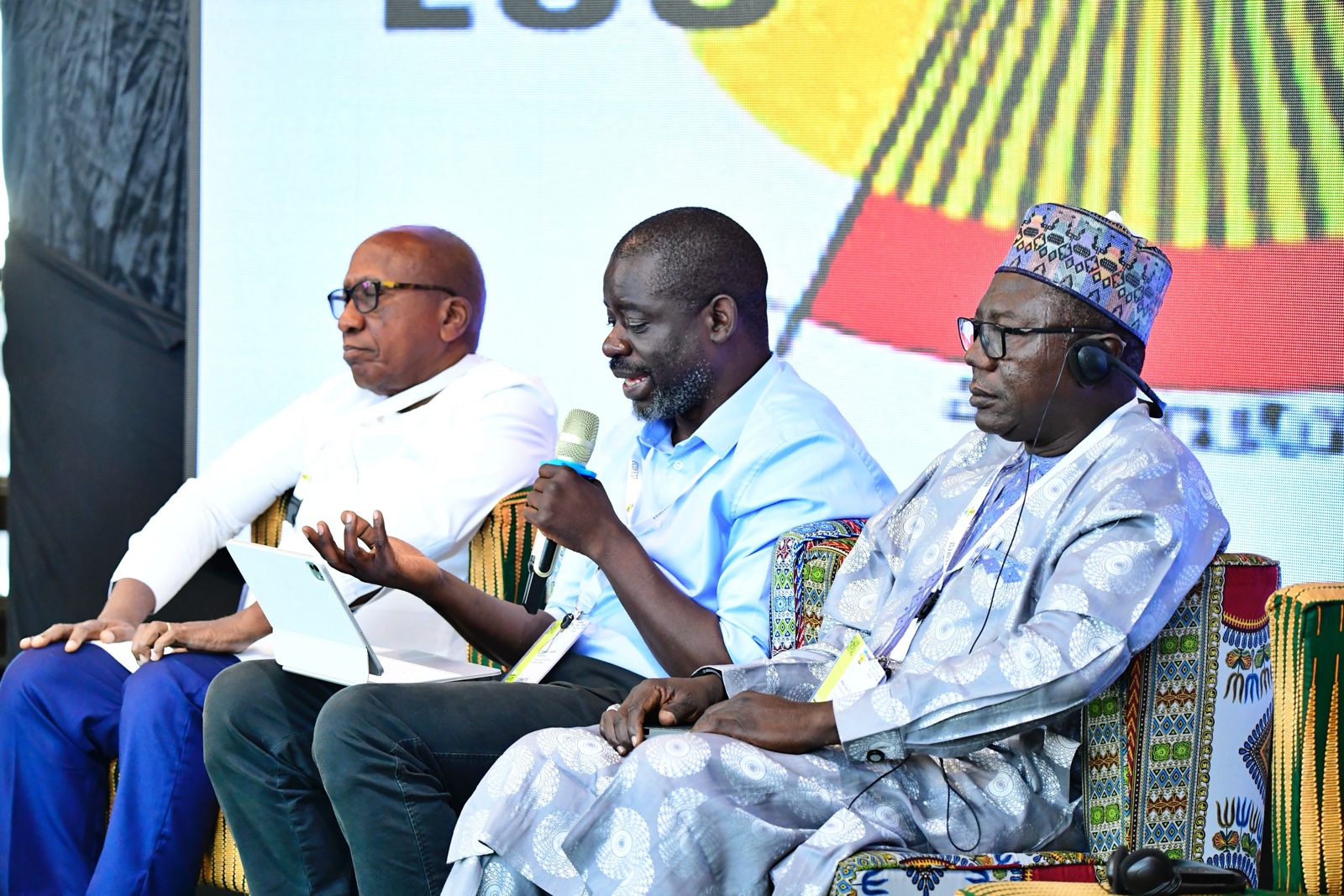
The Museum of Black Civilisations (MCN) in Dakar hosted, on Thursday 4 December, several cultural actors and experts, including the Senegalese economist and thinker Felwine Sarr. At the heart of the discussions was a panel on “Restitution and Protection of Cultural Property”, organised as part of the Professional Meetings of the inaugural edition of the West African Festival of Arts and Culture (ECOFEST 2025).
Addressing a large audience, the author of Afrotopia called for a deep reconsideration of the museum, its history, its functions, and the narratives it upholds as African artworks dispersed across Western museums gradually return to the continent.
From the outset, Felwine Sarr stressed that restitution cannot be treated as a simple “transfer of objects from one place to another.” This return, he explained, “opens a far more profound question: the resocialisation of the objects, the meaning attributed to them, the spaces in which they are placed, and what this implies for the social body.”
According to him, “understanding the contemporary issues surrounding restitution requires returning to the origins of the Western museum, which emerged in the 19th century as a site of identity-affirmation, mandated to conserve the inalienable heritage of emerging nations”.
However, with colonisation, this model was distorted. He noted that “European expansion was accompanied by a massive expropriation of the cultural property of colonised peoples.”
Ethnographic museums then became, in his words, “museums of others”, housing objects that were interpreted and displayed in the absence of their creators. This displacement was accompanied by a process of “re-signification”: ritual objects were turned into ethnographic specimens or works of art, thereby losing part of their original meaning and social function.
“Their significance is altered; the scope of these objects is reduced,” he lamented, raising a fundamental question: “Has the object become something else? Can its original significance be restored, or must a new one be constructed?”
Sarr emphasised that the decolonisation of the museum requires the “pluralisation of narratives “He pointed to North American experiences where First Nations communities co-curate exhibitions.
However, he insisted that the most pressing challenge lies within Africa itself: to rethink museum institutions, their ecosystems, and their modes of display. The museum imported from the colonial model, he argued, is not a neutral framework.
“We must reimagine our own heritage systems and the spaces themselves,” he argued.
This involves drawing from precolonial traditions of royal, ritual, and contextual forms of display, in order to invent museum models suited to contemporary African societies.
Felwine Sarr also reflected on the notion of the universal, often invoked by major museums such as the Louvre to justify the possession of artworks originating elsewhere. The universal, he explained, is “performed” declared by those who claim custodianship of it.
Conversely, restitution and diversification of cultural spaces would help build a “pluriversal” approach—an understanding of the universal rooted in a plurality of cultural centres and voices.
“Objects in Dakar or Cotonou are just as universal as those in Paris,” he affirmed.
In conclusion, he praised the Museum of Black Civilisations, describing it as a “non-subaltern museum”, dynamic, open to transformation and creativity. It is, in his view, “an ideal model capable of restoring meaning to returned objects and, more broadly, renewing the narratives that African societies tell about themselves”.

RELATED POSTS

TMSG to ADC: You are a motley crew of power mongers, palace jesters

NLC’s insistence on eating the seed and expecting a harvest is a metaphor for an absurdity

Why Nigeria must use oil windfall to build a more resilient economy – IMPI

Tags: Culture
ShareTweetPin
The Matters Press

The Matters Press

Related Posts

TMSG to ADC: You are a motley crew of power mongers, palace jesters
Economy/Technology

TMSG to ADC: You are a motley crew of power mongers, palace jesters

April 6, 2026
NLC’s insistence on eating the seed and expecting a harvest is a metaphor for an absurdity
Economy/Technology

NLC’s insistence on eating the seed and expecting a harvest is a metaphor for an absurdity

April 3, 2026
Presidential aides hail IMPI’s boss, Akinsiju at 63, commend his role in advancing Nigeria’s reform.
Economy/Technology

Why Nigeria must use oil windfall to build a more resilient economy – IMPI

March 30, 2026
Tanzania, Australia firms sign $667m deal to mine rare earths
Economy/Technology

$1.3bn landmark FG/AFC Alumnia deal, transformative economic booster–TMV

March 7, 2026
Eulogising Africa’s efforts in midwifing a Covid-19 vaccine
Economy/Technology

Injection of N98bn in 13,500 Centres will Boost Primary Healthcare Nationwide – Group

March 7, 2026
CAC, Pakistani investors on economic diversification
Economy/Technology

Progressivism: The Place of Ideology in Tinubu’s Management of Nigeria’s Economy

March 1, 2026
Next Post
ECOFEST 2025: A facet of African cultural engineering showcased in the digital pavilions

ECOFEST 2025: A facet of African cultural engineering showcased in the digital pavilions

Nigerians kick against re-opening of schools as COVID-19 bites harder

Disbursement of N4.7b TVET stipends, way to go in skill acquisition - TMV

Recommended Stories

INEC prepares for free, credible elections – Yakubu

Plateau, Adamawa elections inconclusive

March 11, 2019
NBS reports increase in Inflation

Inflation rate hits 26.72% in September– NBS

October 17, 2023
Nigeria establishes cottage poultry processing facility to transform livestock

Poultry farmers seek soft loans from government

May 17, 2023

Popular Stories

  • Rising prices of goods cause protests in Morocco

    Rising prices of goods cause protests in Morocco

    0 shares
    Share 0 Tweet 0
  • NCC sets fresh operational fees, spectrum prices for telecom operators

    0 shares
    Share 0 Tweet 0
  • NLNG not responsible for gas supply shortfall, price hike

    0 shares
    Share 0 Tweet 0
  • Hoarding causes hike in prices of grains

    0 shares
    Share 0 Tweet 0
  • Prices of Petrol, diesel increase in November

    0 shares
    Share 0 Tweet 0
TheMattersPress

We bring you the best news update in Nigeria

LEARN MORE »

Recent Posts

  • TMSG to ADC: You are a motley crew of power mongers, palace jesters
  • NLC’s insistence on eating the seed and expecting a harvest is a metaphor for an absurdity
  • Why Nigeria must use oil windfall to build a more resilient economy – IMPI

Categories

  • Agriculture
  • Economy/Technology
  • Energy
  • Entertainment/sports
  • Features
  • Foreign
  • Multimedia
  • Natural Resources
  • News
  • Oil and Gas
  • Photo
  • Politics
  • Security
  • Thematterspress
  • Uncategorized
  • Video

© 2025 Domo Tech World - Powered by Thematterspress.

No Result
View All Result
  • Home
  • News
  • Features
  • Thematterspress
  • Multimedia
    • Audio
    • Photo
    • Video
  • About us
  • Contact Us

© 2025 Domo Tech World - Powered by Thematterspress.

Welcome Back!

Login to your account below

Forgotten Password?

Retrieve your password

Please enter your username or email address to reset your password.

Log In
Call Us