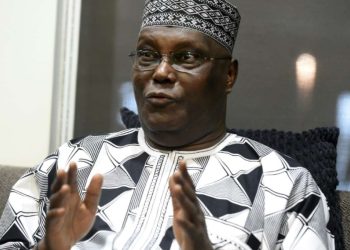


One of Nigeria’s notable policy groups, the Independent Media and Policy Initiative (IMPI) has said that plans by former Vice President Atiku Abubakar to restore fuel subsidy, if elected President, would reduce redistributable revenue to subnational governments.
It also said in a policy brief that the proposal will constrict cash flow and have a negative effect on ongoing federal projects as well as foreign investments.
In the statement signed by its Chairman Dr Omoniyi Akinsiju, IMPI noted that as presentable as the Atiku plan may be on the surface, it was bound to affect revenue flow to all tiers of government.
It said: “Under his proposed Atiku Economic Recovery Plan (AERP), the former Vice President outlines a model structured around production rather than consumption. He proposes shifting the subsidy from “importation to production,” transferring incentives directly from middlemen traders to local Nigerian refineries.
“Eligible public and private local refineries will receive domestic crude allocations at a discounted price, on the condition that refinery operators qualify for discounted crude only if they pass the exact savings on to consumers.
“In his view, this depends on an independently verified, transparent pricing formula for refined products supplied to the Nigerian market. According to him, the entire programme will operate under a strict, pre-determined annual budget ceiling approved by the National Assembly.”
IMPI however argued that the proposal which the former Vice President’s camp said was designed to provide relief to the citizenry from the global cost of living crisis, would end up creating a bigger problem in the polity.
“From a political economy framework, this policy proposal operates on a dual axis. It exploits immediate social discontent over the rising cost of living while introducing long-term structural risks to Nigeria’s fragile fiscal framework.
“Despite its popular appeal, fuel subsidies are inherently regressive economic tools. Wealthier households with multiple vehicles consume a disproportionate volume of petrol compared to the poorest demographics, who rely primarily on public transport or lack electricity access entirely. A fuel subsidy acts as a fiscal illusion. It changes where the cost is paid, rather than eliminating the cost itself.
“Historically, Nigeria’s fiscal morbidity, which ultimately led to infrastructure funding collapse, followed the federal government deducting subsidy costs “at source” from national oil revenues before the money could reach the Federation Account. This arbitrary deduction left state and local governments financially crippled.
“Atiku’s model repeats this exact pattern. By giving discounted crude oil directly to local refineries, the government creates a massive hidden deduction. This directly reduces the revenue flowing into the Federation Account, stripping state and local government leaders of the liquid capital needed to build rural feeder roads, primary healthcare centres, and community water infrastructure,” it said.
In dismissing the proposal, the policy group insisted that it was a populist, political gimmick which would scare off investors and alarm Nigeria’s trading partners.
“Atiku Abubakar’s “Follow-the-Barrel” model is a policy blueprint that seeks to limit import fraud, but it cannot escape the core laws of public finance. By replacing a cash subsidy with a crude oil revenue discount, it simply re-packages the original fiscal problem like arbitrage and revenue leakages.
“The Atiku-promised policy shrinks the national revenue pool, scares international investors, and strains sub-national budgets. Giving away crude at a discount means directly reducing the country’s dollar earnings. This shrinks the total revenue paid into the Federation Account. A smaller revenue pool means smaller funds distributed through the Federation Account Allocation Committee (FAAC) to states and local governments.
“The Independent Media and Policy Initiative (IMPI) strongly rejects former Vice President Atiku Abubakar’s policy declaration to restore the petrol subsidy regime if elected.
“As a non-partisan, data-driven Think Tank dedicated to structural economic stability and the rule of law, IMPI views this proposal not as a viable economic alternative, but a regressive political gimmick.
“Reintroducing fuel subsidies would severely destabilise Nigeria’s fiscal health, violate clear statutory laws, and push millions of citizens back into deeper structural poverty,” it surmised.
End