
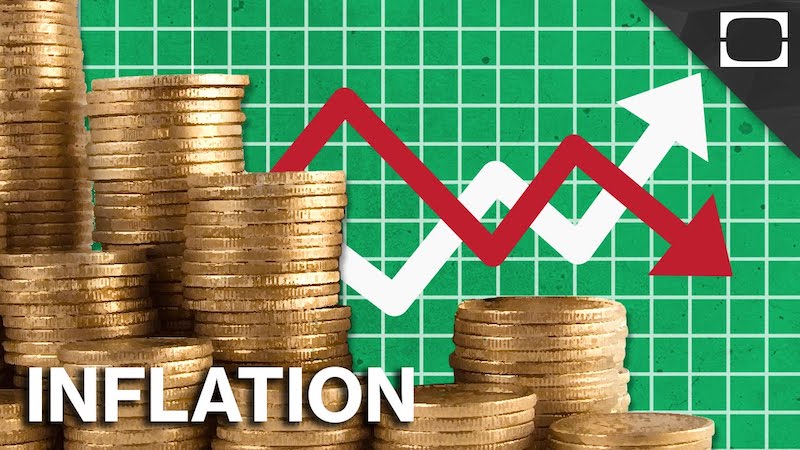
Mr Godwin Emefiele, Governor, Central Bank of Nigeria (CBN) on Friday said the steady increase in headline inflation from 15.60 per cent in January to 20.77 per cent in September was consistent with global trends.
Emefiele said this at the 57th Annual Bankers Dinner, organised by the Chartered institute of Bankers Nigeria (CIBN), on Friday in Lagos.
The dinner had the theme, “Radical Responses to Abnormal Episodes: Time for Innovative Decision-making” wass appropriate and well timed.
He also said headline inflation soared to 20.77 per cent in September, indicating eight consecutive months of uptick, and that the upward momentum was after a successive period of decline in 2021, due to balanced monetary policy actions.
He said upside pressure on consumer inflation re-emerged during the year, as global conditions complicated existing local imbalances to undermine price stability.
“Food remains the major component of domestic consumer price basket. The annualised uptick in headline inflation mirrors the 6.21 percentage points upsurge in food inflation to 23.34 per cent in September.
“During this period, core inflation also resumed an upward movement from 13.87 per cent in January to 17.60 per cent.
“In addition to harsh global spill overs, exchange rate adjustments and imported inflation; inflation was also driven by local factors such as farmer herder clashes in parts of the food belt region,” he said.
Emefiele said during the early part of 2020, the world economy experienced the most significant downturn last witnessed since the Great Depression following the outbreak of the COVID-19pandemic.
He said the effect contracted global GDP by about 3.1 per cent in 2020, and commodity prices went into a state of turmoil as the price of crude oil plunged by over 70 per cent.
He said as the world struggled to recover to pre-pandemic conditions, the global economy was yet again hit by another adverse occurrence with the eruption of the Russian-Ukraine war.
He said the war, along with the sanctions placed on Russia by the US and its allies, led to a spike in crude oil prices.
He said in the attempt to contain rising inflation, advanced markets such as the US, began to increase their policy rates, which led to a tightening of global financial market conditions along with a significant outflow of funds from emerging markets.
“The subsequent strengthening of the US dollar further aggravated inflationary pressures, along with a weakening of currencies, and depletion of external reserves in many emerging market countries.
“Today close to 80 per cent of countries have reported heightened inflationary pressures due to a confluence of some of the factors mentioned above,” said Emefiele.
He explained that central banks in emerging markets and developing economies, in a bid to contain rising inflation were also compelled to raise rates, which was expected to lead to a tapering of global growth over the next year.
“In fact, the short-term global growth projections by the IMF have been downgraded three times in 2022 and is likely to be below the 3.2 per cent and 2.7 per cent estimates for 2022 and 2023, respectively.
“Average growth among advanced economies is projected to plunge from 5.2 per cent in 2021 to 2.4 per cent in 2022 and 1.1 per cent in 2023.“Estimated output growth in emerging markets, is expected to slow from 6.6 per cent in 2021 to 3.7 per cent apiece in 2022 and 2023,” he said.
He said in view of the food, energy, and cost-of-living crises in many countries, there were growing restrictions on food exports from many countries.
“As at the last count, about 23 countries, mainly in advanced economies, according to the World Bank have banned the export of 33 food items. “Seven other countries have additionally implemented various measures to limit food exports,” said Emefiele.
On currency redesign, Emefiele said, “Analysis of the key challenges primarily indicated a significant hoarding of banknotes, as over 85 per cent of currency in circulation were held outside banking system.
“This is even as currency in circulation more than doubled from N1.46 trillion in December 2015 to N3.23 trillion in September 2022; a worrisome trend that must be curbed.”
He, therefore, said the policy would quicken the attainment of cashless economy as it was complemented by increased minting of the eNaira.
According to him, the redesigned notes will also curtail currency outside the banking system, and as the monetary policy becomes more effective, it will help rein in inflation.
Earlier, Dr Ken Opara, CIBN president, commended Emefiele, saying he had during the year, continued to be purposeful in curtaining economic shocks from the aftermath of the fourth wave of the COVID-19 pandemic.
He commended him for keeping inflation and other related economy indices, especially the naira, from distortions exacerbated by declining production levels fueled by high cost of production, insecurity, dwindling government revenues, foreign exchange volatility and uncertainty in the global oil market.
Opara said, “through the careful management of the Monetary Policy Rate (MPR), the CBN continued to drive the recovery path of the Nigerian economy through the expansion of credit to the real sector, guided management of foreign reserves and promoting sound financial environment and monetary policy.”
The Annual Bankers’ Dinner is a platform where stakeholders of the banking community gather to reflect on the developments in the banking industry and economy over the past year, while gaining economic insights for the year to come.