
Abuja, Jan. 1, 2024 : Some Stakeholders in the manufacturing sector say Nigeria needs a specific blueprint to critically address the impact of inflationary pressures on all economic activities in the country.
According to the World Economic Forum’s Global Risks Report 2023, the world’s top current risks are energy, food, inflation, and the overall cost of living crisis.
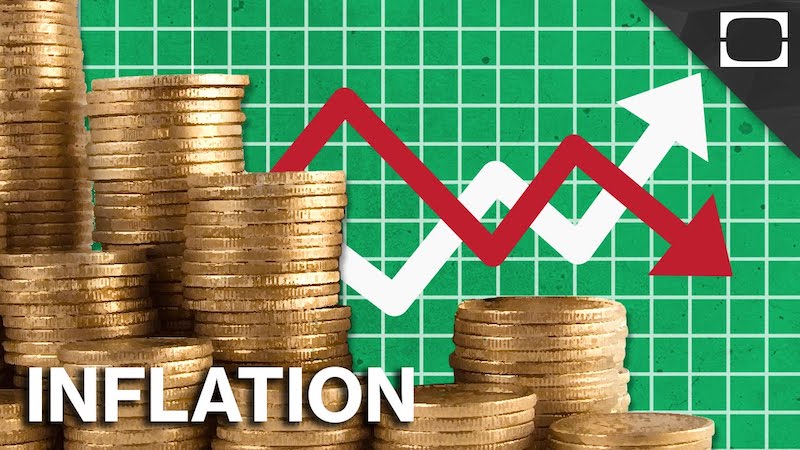
In 2023, Nigeria’s inflation rate in January started at 21.82 per cent and by November, had soared to 28.20 per cent with its attendant impact on manufacturing, cost of living vis-a-vis healthcare, feeding and other major dynamics.
Already, the federal government, through its “Renewed Hope Agenda”, recently rolled out various intervention programmes to cushion the effect on both the economy and individual livelihood.
The intervention programmes include N35,000 wage award, N25,000 cash transfers to 15 million vulnerable households, and N200 billion provision of stable food and agricultural inputs.
Others are N50,000 grant to Nano businesses, while Micro, Small and Medium Enterprises (MSMEs) and manufacturers are to access loans up to N1 million and N1 billion, respectively.
However, economic experts have emphasised that for any meaningful change and stemming of hyper-inflation in 2024 and beyond, major monetary and fiscal policy shake-up as well as inflation blueprint tailored to fit the country’s need are holistically necessary.
An Associate Professor of Entrepreneurship at the Kwara State University (KWASU), Dr Zekeri Abu, told the News Agency of Nigeria(NAN) that Nigeria must consciously begin to invest in its area of comparative advantage and strength to grow the economy.
This, Abu explained, would give the country its much needed edge as a player under the Africa Continental Free Trade Area (AfCFTA) to ensure export-oriented balance of trade.
He noted that for Nigeria, common causes of inflation through the year have been traced to removal of oil subsidy, increase in price of food items, ports congestion, high cost of manufacturing production and import inflation, among others.
The associate professor recalled that serious exporting countries like Japan, United Kingdom, China, Germany, United States of America and India, Canada invest massively in manufacturing, value-chain and ecosystem, in products of everyday use such as textile, automobile, food, technology, pharmaceuticals and oil.
“With this in mind, it has become very important for Nigeria to begin to balance her trade by shoring up its exports to become a trade giant, accumulate more foreign exchange to boost the country’s reserves and excert confidence in its economy.
“The will-power of the Federal Government must now be focused on areas where the country has comparative advantage such as agriculture to begin export of finished products like rice, cocoa and livestock.
“Government must further invest in the required level of skill acquisition, knowledge, research and technological innovation to enhance the country’s manufacturing sector, address import inflation and create massive employment opportunities.
“It is also very important to revitalise the tin industry as an ancillary industry to the canning industry to wake up the manufacturing eco-system to exhibit that Nigeria has love for processed canned food.
“Nigeria must begin to carry out research into how we can get value from rubber seeing that the country is a big source of gas and synthetic crude that can be used in rubber.
“In essence, the country’s economy boasts of economic diversity which can be harnessed by the manufacturing sector via increased production for exports to give it its pride of place in the comity of nations, he said.
Mr Segun Ajayi-Kadir, Director-General, Manufacturers Association of Nigeria (MAN), advocated major infrastructural facilities to facilitate the aggregation of raw materials for export to develop the domestic economy and its people.
Ajayi-Kadir said that several initiatives aimed at developing the economy have various degrees of successes and failures, noting that performance of the manufacturing sector has been largely unimpressive as the country remained a largely import dependent country.
According to him, local manufacturing, though experiencing some measure of progress in light manufacturing, still largely depends on foreign inputs.
He listed a number of factors inhibiting the growth and development of the economy, among which are power and transport and
ports, due to unfavourable policies.
He noted that the manufacturing sector contributes less than 10 per cent to the country’s Gross Domestic Product (GDP) due to inflation, which has risen to about 30 per cent.
This, he said, was even as interest rate at double digits continue to limit the potential of the sector for expansion due to high-rate of foreign exchange and the non-prioritisation of allocation to the sector that truncates its growth prospect.
“There is, therefore, the need to address the binding constraints that have continued to militate against the performance of the manufacturing sector and limited its share of contribution to the GDP.
“Nigeria must encourage investment in local raw materials through direct incentives, improve power supply by removing the impediments to access of the eligible customers scheme by manufacturers.
“It is also important to review the curricular of tertiary institutions to align with industry skill requirements and subject to updates based on the direction of global changes.
“We must rehabilitate existing major economic road corridors and construct new ones for seamless movement of raw materials to factories and finished goods to the markets and invest significantly in ports infrastructure to aid smooth clearing process.
“There should also be the elimination of the gridlock into the ports, whilst the moribund rail tracks leading from the ports to industrial areas are reactivated,” he said.
Dr Chinyere Almona, Director-General, Lagos Chamber of Commerce and Industry (LCCI), described the current inflation as the highest since August 2005 which has continued to reflect in the depreciation of the Naira, high price of petroleum products and food prices.
She noted that inflation of food and non-alcoholic beverages have remained the highest contributor at 14.61 per cent.
Almona stressed that though inflation has been accelerating for eleven consecutive months, the battle must be checked by the Central Bank of Nigeria (CBN).
“We anticipate economic agents, including households and businesses, to continue to deploy strategies that will mitigate inflationary pressures.
“CBN is responsible for formulating and implementing monetary policies that foster currency stability. This involves a delicate balance between managing inflation, ensuring a competitive exchange rate, and promoting economic growth.
“Therefore, the CBN needs to adopt a well-calibrated policy mix that addresses the unique challenges facing the Nigerian economy.
“By promoting economic diversification, implementing effective interest rate policies, managing the exchange rate judiciously, and embracing inflation targeting, the CBN can contribute significantly to ensuring the stability of the Naira and fostering a robust and resilient economy,” she said.
Almona implored the government to address challenges inhibiting domestic production and ease the bottlenecks to the distribution of goods within the country.
She urged the government to continue to address the problems of insecurity and other factors affecting agriculture productivity in the country to improve food supply.
Dr Muda Yusuf, Founder, Centre for the Promotion of Private Enterprise (CPPE), stated that the country’s current fiscal deficit is highly inflationary, lamenting that the global energy situation and rural-to- urban migration among others have affected agricultural productivity.
As a way forward, Yusuf, a private sector activist, urged the government to address exchange rate, energy cost, insecurity, and climate change dynamics such as flooding.
“We must begin to consider what can be done about the environment and also enhance our local refinery to reduce pressure on foreign exchange.
“Government also needs to invest heavily in rail logistics because it is now expensive to move goods on the roads given the state of our roads.
“There’s absolutely no need to move cattle, food, among others, over hundred of kilometres by road when just one rail would move what hundred trucks can carry,” he said.